Information Library

Total. 90
What type of grips should I choose? Wedge? Side?
Accessories

What type of grips should I choose? Wedge? Side?

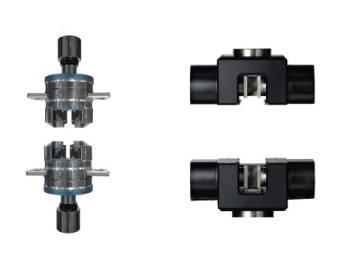
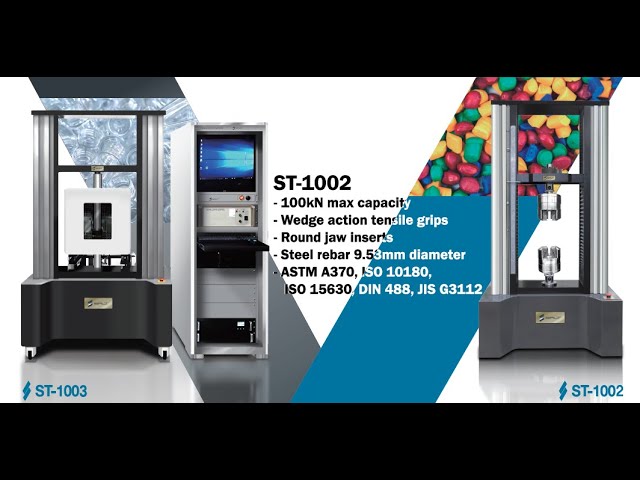
There are many types of jigs that are used on UTMs.  Let’s focus bit more on the most common types used in tensile tests.  Wedge action grips and side action grips.  Let’s find out how they work and when they are used so that we can choose the right grip for the right material testing.    Wedge action grips are recommended for samples that need to be held tightly.  Ex: Metals, hard plastics etc. Side action grips are for softer samples that have risk of breaking  or tearing if too much tension is applied upon the sample.  Ex: soft plastic, textiles, films etc. WEDGE ACTION GRIPS Just as the name explains this grip has a funnel shape groove with a set of jaws in a wedge shape.  The wedge shaped jaws slide on the slanted “funnel” shape wall on the grip to adjust opening sizes.      *When the wedge shaped jaws are pulled upwards towards the  larger area of the funnel shape their spaces between becomes greater.    As the wedge shape jaws are pulled/pushed downwards towards the  smaller area of the funnel shape the jaw spaces become tighter. Once the tensile test begins with the samples gripped in the jaws, the tension of the grip pulling upward  and the sample being held down by the bottom jaws will drag the top jaws down along with the sample.  This action creates the jaws to slide down the funnel shaped walls creating a tighter space.    1.During a tensile test the cross head pulls upward along with the attached grips.  2.The sample held by the bottom jaws resist the tension that’s being pulled upwards thus creating an opposite force.  3.The jaws gripping on to the sample gets dragged downwards holding on to the sample tigher and tigher. Advantages -The more sample tries to slip, the wedge action grip hold the sample tighter keeping it from slipping out. -Less force is required to hold a sample compared to side action. (If 100kN wedge grip is needed to hold a sample during a test, in order to grip the sample with equal amount of force a much larger side action grip will be needed.)    Disadvantages -Symmetrical sample clamping only recommended -Heavy fixture -Clamping force on the sample is hard to adjust Availiable types of Wedge grips Mechanical (Manual), Penumatic and Hydraulic.   SIDE ACTION GRIPS Side action grips are a type of grip that jaws grip the samples from both sides. It has an equal holding force through out the test which is more suitable for “softer” material. Materials that are pron to tear or rips would use such grips. There are single bolt action(single action) or double side action grips. Single side has one side that is fixed at a certain position and the other side will move to grip the sample. On the other hand you will be able to control the movement and claming of both jaws on the grips on the double side action grips.     Side action grips are usually recommended for tests/samples that does not require high capacity clamping. Side action grips decreases in clamping force as tension builds and the sample tries to slip out. This can be good because softer samples do not rip or tear. This also can be bad because the samples can slip out of the grips. Advantages -Force control on clamping is easier to control than the wedge action. (Good for tests that require clamping force) -Since the jaws hold on to the sample with equal or less amount of force through out the test, a tare or rip is less likely to happen on film/softer sample materials. -Light fixture on low capacity testing. -Able to grip symmetrical and asymmetrical samples Disadvantages -Requires larger grip to hold sample in the same amount of force as a wedge action grip. -More chance of sample slippage compared to wedge action Availiable types of Wedge grips Double and Single Mechanical (Manual), Penumatic and Hydraulic.   Please visit our previous blog post to see more grips and jig types that may interest you. https://www.light-salt.kr/eng/customer/info.php?ptype=view&idx=7445&page=1&code=info_eng&category=13

22.09.06

Video extensometer(ST-S-ONE) of hydraulic universal material testing machine(ST-1004)/Field of view
Accessories

Video extensometer(ST-S-ONE) of hydraulic universal material testing machine(ST-1004)/Field of view

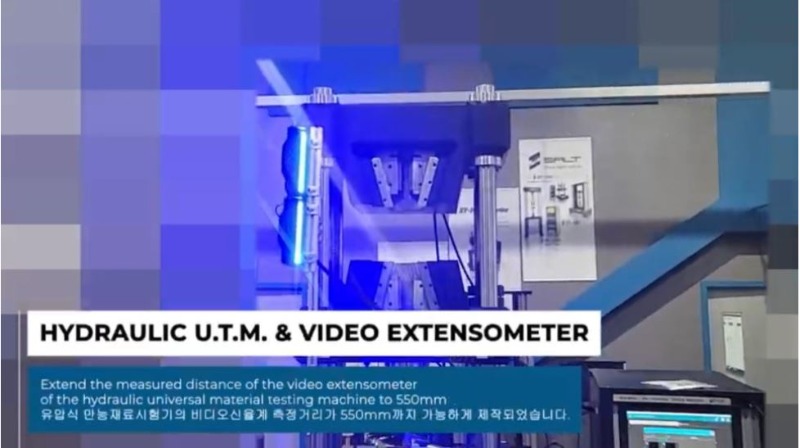
Video extensometer(ST-S-ONE) of hydraulic universal material testing machine(ST-1004)    Field of view 550mm   Hello, We're Salt Co., Ltd., a testing machine company. Today's content is the rebar tensile test equipped with the double unit video extensometer on the hydraulic universal testing machine.   When two video extensometer modules are installed, elongation can be measured on a sample up to a field of view of 550mm.     Video content of video extensometer installation of hydraulic universal testing machine    0:00 Intro 0:07 Title Screen 0:12 Hydraulic U.T.M. & Video Extensometer 0:27 Rebar Tensile Test 0:34 Alpha Software 0:50 Outro     hydraulic universal material testing machine & Video extensometer   Extend the measured elongation of the video extensometer of the hydraulic universal material testing machine up to 550mm.   Rebar tensile test video extensometer installed (2 modules)   By installing two video extensometers, the measurement distance  of the rebar tensile test is doubled compared to when one is installed.   Alpha analysis software   Strain analysis software designed for use with the ST-S-ONE non-contact video extensometer.   Line strain distribution   To provide more information in the standard test, we plot the strain distribution along a single line. In addition, detailed analysis of elastic modulus, yield point, elongation, specimen deformation and stress is possible.

22.08.25

ST-150M / Method and Test Results of Mixing Roll Machine
INFORMATION

ST-150M / Method and Test Results of Mixing Roll Machine

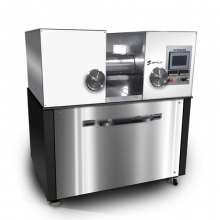
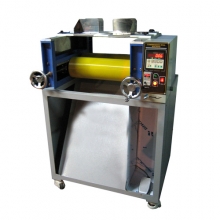
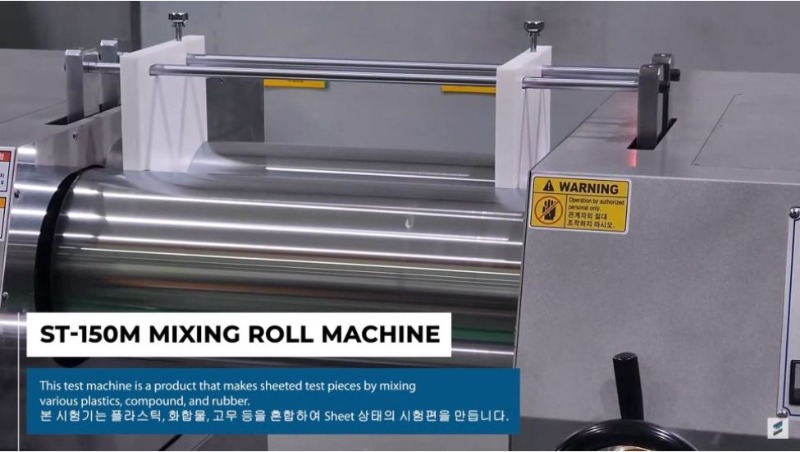
Method and Test Results of Mixing Roll Machine    MODEL : ST-150M(200Ø X 500mm) Mixing Roll Machine     Hello, We're Salt Co., Ltd., a testing machine company. Today's post is about our ST-150M Mixing roll machine.    ST-150M How to Use Mixing Rolls and Order of Test Video Contents     0:00 Intro 0:07 Title Screen 0:14 Introducing The Mixing Roll Machine 0:31 Mixing Roll Test 1:32 Emergency Stop Switches 1:40 Testing Result 2:15 Inside The Roll Drive Unit 2:20 Outro     The Salt Co., Ltd.'s mixing roll machine has excellent precision and it is safe with various safety devices and anti-backflow systems. Our company is certified for mixing roll KCS safety by the Korea Occupational Safety and Health Corporation.    The mixing roll mixes plastic, compound, rubber, etc. to make a sheet-like test piece.     Roller Gap Handle A handle that adjusts the spacing of the rollers.     Roller speed control Sets the direction and number of rotations of the electric and rear heat rollers.     Roller stop button  Stops the operation of the device system.     Main Power on/off     Emergency Stop Switches - It can shut down the system in an emergency - 1-Left front plate button, 1-top right plate button, 1-knee switch, 1-foot switch      ST-150M Test results of mixing roll By reducing the temperature deviation of the roller, the precision is excellent, and the sample rotation speed, temperature control, and thickness control and possible.

22.08.17

Strain Gauge Sensors
INFORMATION

Strain Gauge Sensors

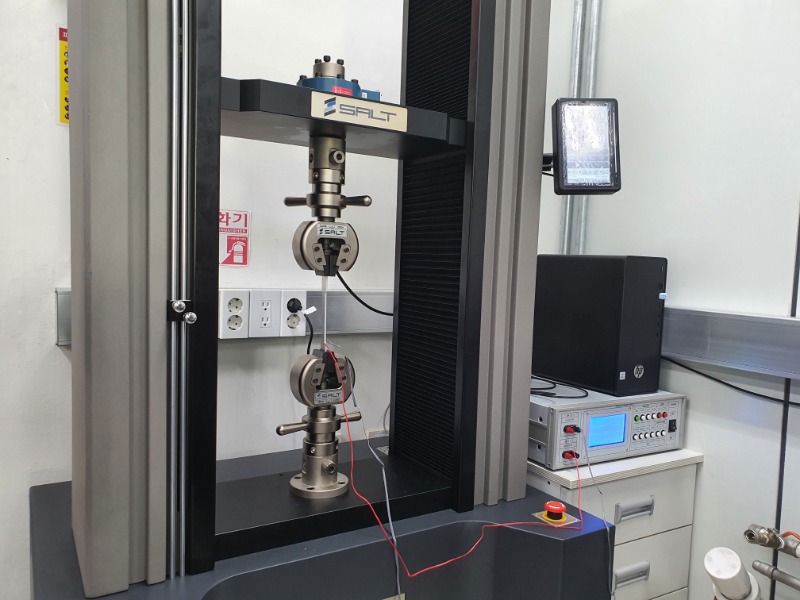
  Strain gauge (Strain gage) sensors for strain measurement   Strain gauge A strain gauge (aka strain gage) is often used to test the extension, elongation or strain of a specimen. Strain gauges give the benefit of being flexible, cheap and the contacts being low stress to the sample. Often used for metals, composites, carbon fiber and other advanced materials that require strain measurements.    The strain gage is stuck to the specimen directly and by measuring the changes in electrical resistance / conductance the strain is measured. Strain gauges are used to measure load and strain in many different applications. For strain measurement during tensile, compression, flexural,. torsion and other tests a data logger is required.  Image of UTM, specimen and data logger   Image of strain gauge on the specimen     Image of the strain gauge connections to data logger      Salt's software and data logger makes the use of strain gauges user friendly.   We have integrated the data logger with our software so the user can easily change the parameters of not only the test but also the strain gauge. Strain gauge parameters such as the gauge length , Ohms (Ω),factor, sign etc. can be input in the Salt UTM Software. This allows the user to easily input the strain gauge data which is very useful if many different strain gauges are used.   Image of data input/parameter in Salt UTM Software   Image of real time display of strain (displayed in mm)     During testing the specimen is deformed and the strain gauge measures the change over time. The Salt UTM software allows for accurate real time analysis of the strain gauge values and post test data as well. The raw data can be plotted for post-test analysis.    

21.10.30

Coefficient of Friction - ISO 8295, ASTM D 1894
Accessories

Coefficient of Friction - ISO 8295, ASTM D 1894

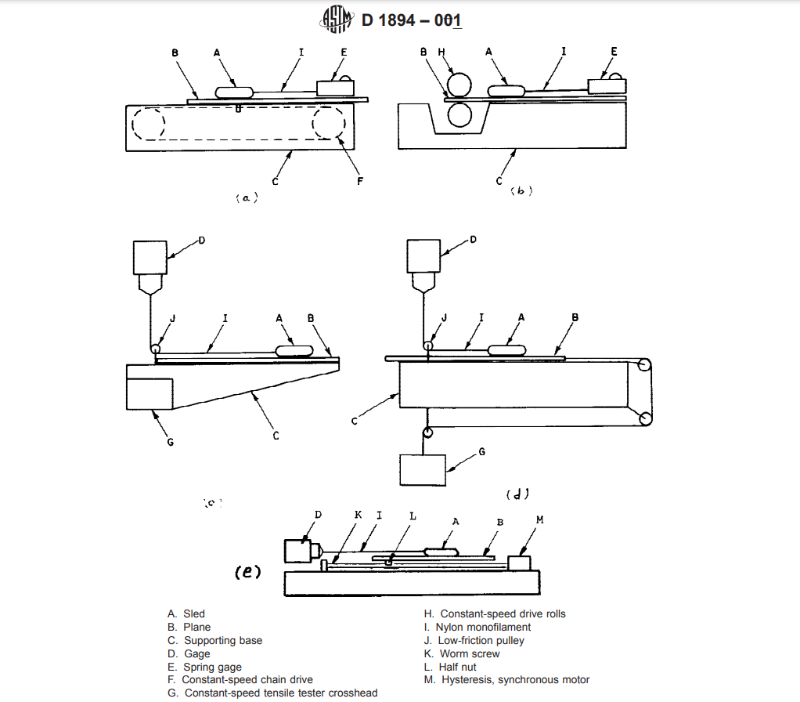
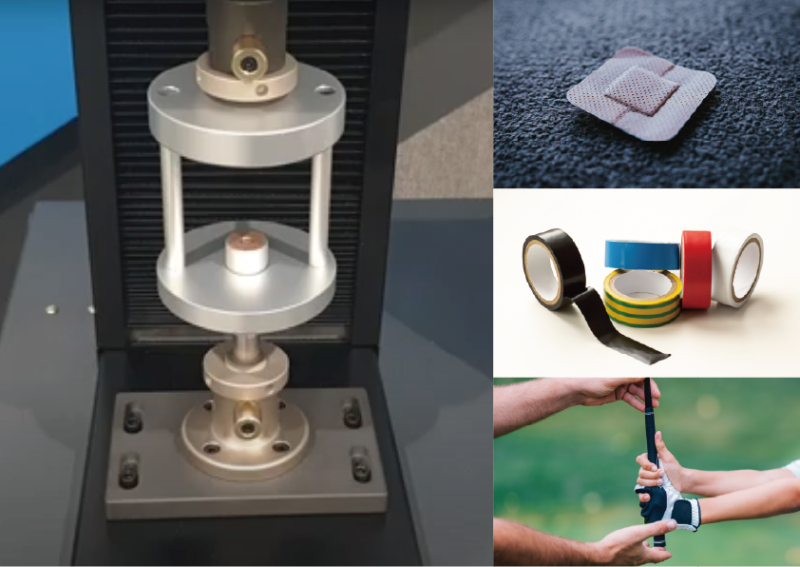
Coefficient of Friction Testing    ASTM D 1894: Static and Kinetic Coefficients of Friction of Plastic Film and Sheeting  ISO 8295:Plastics - Film and Sheeting - Determination of the coefficients of friction   As stated in ASTM D 1894: "1.1 This test method covers determination of the coefficients of starting and sliding friction of plastic film and sheeting when sliding over itself or other substances at specified test conditions. The procedure permits the use of a stationary sled with a moving plane, or a moving sled with a stationary plane. Both procedures yield the same coefficients of friction values for a given sample." In short, COF is used to determine and measure the friction of a materials surface. This can be tested by running the two surfaces in plane contact under uniform contact pressure. The forces recorded during the uniform sliding of the film surfaces are averaged.   ASTM D 1894 - Fig. 1 Five Method of Assembly of Apparatus for Determination of Coefficients of Friction of Plastic Film   ST-330 Friction Tester The ST-330 is Salts dedicated COF testing apparatus. The friction tester comes equipped with a force and displacement indicator which can be connected to PC to our testing software for better mangement of controls, reports, graphs etc.     ST-330 - Friction Tester   ST-1001 COF Stage and Sled The COF test can be done on a UTM with the COF stage and sled accessory. This allows for more versatility as many films and plastic sheets require tensile testing, shear testing, tear testing etc.      COF test accessories on ST-1001   On our Salt UTM software inputs and test parameters such as sample size, sled weight, test speed, pull distance etc. can all be easily adjusted to the testing requirements. Calculations such as averaging and COF values are all done post test and readily available in report format for printing or exporting.  COF Testing   Test report - Averaging start (displacement) and end highlighted in gray  

21.10.18

Extensometers for tensile tests
Accessories

Extensometers for tensile tests

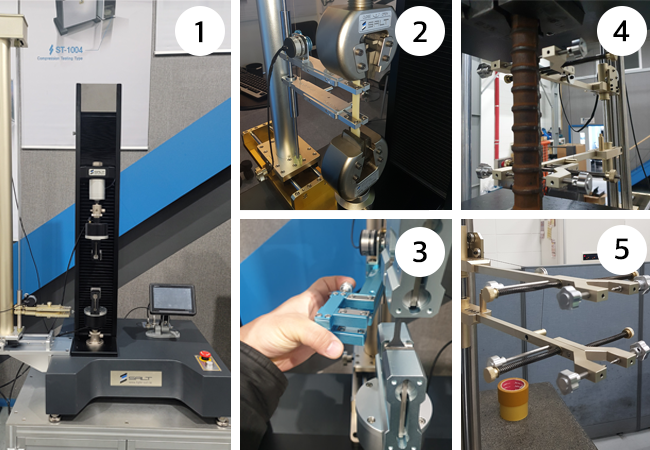
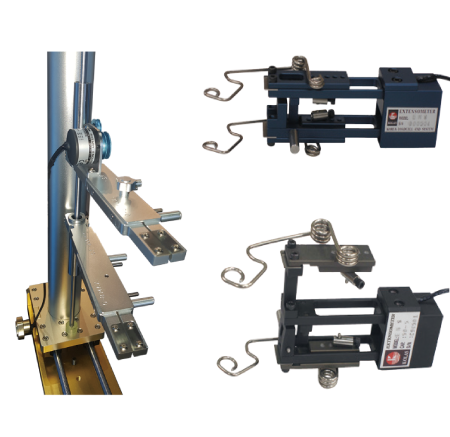
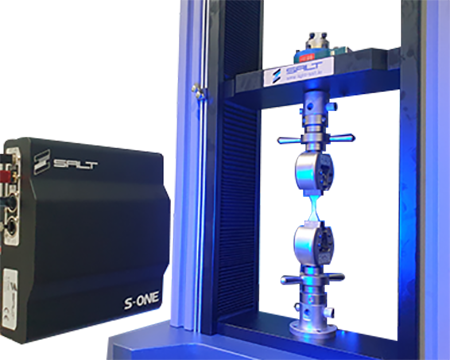
  Extensometers   Extensometer: An instrument for measuring minute degrees of expansion, contraction, or deformation.   Extensometers (extension measurement devices) are used to measure the strain or deformation/deflection in the tested specimen during tensile testing. These sensors or devices can come in many different forms and have different applications depending on the test method, sample and measurement requirements. During tensile testing an extensometer (Extension meter) is commonly used to measure the deformation or elongation of the actual sample rather than measuring the mechanical movement of the UTM.    ST-S-ELON : Encoder Type Extensometer        Encoder (rotary) type extensometers are commonly used on materials that experience high elongation %. Encoders can measure infinitely meaning that the length of measurement is limited by only the mechanical build. Rotary encoders are often used as they are very versatile.  The encoder type extensometer (ST-S-ELON) is perfect for measuring plastic deformation, elasticity, elongation % etc. The mechanical build of the ST-S-ELON is made so that the gauge length (original measurement distance) can be easily adjusted making it one of the most versatile choices.        Different "arms" and "grips" on the ST-S-ELON1. ST-S-ELON Encoder type extensometer on ST-1000 UTM 2. O-ring face on plastic sample 3. Side grip type arms  4. & 5. Pin type for steel and metals   ST-S-STRG : Strain Gauge Extensometer        Strain gauge extensometers use a sensor that can measure strain and converts it to readable electrical current by measuring the resistance changes. Strain gauges can be used in its raw form by sticking the strain gauge on the sample to be measured or more commonly it can be used in the form of a Strain Gauge Extensometer (ST-S-STRG). In its Extensometer body the strain gauge is secure and enclosed and arms can be made to fit the sample properly. Typically these strain gauge extensometers are the “clip on” variety and are more sensitive than the encoder type extensometers.  The strain gauge extensometer (ST-S-STRG) is typically used for measuring strain in a smaller range. The gauge lengths are fixed to one or two gauge lengths and the travel distance (elongation/deformation) is limited. However with these trade-offs you get a more sensitive and precise reading. ST-S-STRG is most commonly used for metals, composites and other samples with low elongation %.   Like the ST-S-ELON the ST-S-STRG also comes with different wire bands to grip the sample  ST-S-ONE : Contactless Video Extensometer        The benefits of a non-contact video extensometer is that it is the most versatile. The advantages of using a con-contact extensometer is that it can be used on virtually any sample as it causes 0 stress to the specimen. Also the video extensometer can be used to measure strain or deformation of a very large sample or specimen as it as the video extensometer uses digital image correlation and measures strain/deformation by way of video (image to image / Frame by frame measurement). It can be used to determine deflection (change) in any direction and have multiple “probes” to measure the sample within the point of interest.   ST-S-ONE Contactless video extensometer on ST-1001 set up   The ST-S-ONE can be used to measure virtually any sample but really shines when it comes to measuring samples that may not be possible to measure with contact extensometers such as sensitive specimen (thin wires, films etc.) or very large specimen such as support beams or structural components. Due to its contactless nature, it puts 0 stress on the sample being tested and is only limited by its FOV.  The video extensometer not only measures in real time but can also record the test video for post process analysis. This means the user can review the test in video format and measure different measurements on the sample limitless times. The Alpha software is used with the ST-S-ONE which was specifically developed for material property analysis. The Alpha software allows the user to measure elongation, deflection, flexural strain etc. Digital image correlation area can measure strain and displacement by mapping a mesh over the specimen.      ST-S-ONE Alpha software preview ST-S-AUTO : Automated Extensometer     The ST-S-AUTO is a fully automated extensometer. This type of extensometer is ideal for customers that have high frequency testing. Testing Hundreds of times a day, the use of manual extensometer do add on alot of time to the testing cycle. It also eliminates user error or human deviation in setting up gauge length and starting points. The gauge length is input into the software and the ST-S-AUTO moves to the appropriate starting position where it will clamp the specimen on start of the test. After the test is over the ST-S-AUTO will unclamp and return to its starting position (origin). The ST-S-AUTO can be changed to fit different samples, materials, gauge lengths and measurement distances. The ST-S-AUTO comes equipped with a dedicated remote for semi auto use as well for easier set up.   1. Deciated remote for ST-S-AUTO for easier access to controls 2. Close up of the extensometer arms on the ST-S-AUTO 3. Integrated Salt UTM Software controls for gauge length, open close, return, auto/manual etc.   ASTM E83, ASTM 2309, ISO 9513

21.07.20

Tensile / tension test grips and jigs
Accessories

Tensile / tension test grips and jigs

Grips and jigs for tensile testing Tensile testing is most commonly used in material testing. It is a good way to measure expected elongation, deformation, strength and yield. Tensile stress is applied to the specimen by pulling apart the specimen.    Depending on material type, size, capacity and method, different grips can be used for tensile testing. With any tensile testing grip it is crucial to note that stress to the specimen should be minimized and slippage should not occur during testing.    Tensile grips & jigs - Metals For harder materials such as metal, it is often recommended the jaw faces have the proper hardness value for the material being tested. The most comon used tensile grips are our wedge action grips   Example video of wedge action grips being used to tensile test rebar  There are different variations of tensile grips such as our hydraulic grips and pneumatic wedge action grips. Depending on your testing application we can recommend the correct set-up for your needs.   - Plastics and films Plastics cover a wide range of hardness, elongation and overall properties. For most hard plastics a wedge action grip is sufficient but for softer more stress-prone samples different tensile grips are suggested.   For thin films and some thin plastics our film grips can be used. These grips also are available in pneumatic versions as well. - Textiles Textiles not only cover everyday textiles for clothes, automobiles and furniture but also samples that require much higher testing capacities such as straps, seat belts and geotextiles.   Tensile testing geogrid         Textile cords/string/ropes, wires and other cable shapes can be tested using capstan grips   As we cannot possibly cover everything on this one post, if you need more information for your application, feel free to contact us at salt-s@light-salt.kr or check our accessories page.  

21.06.02

Food texture analysis - Shear testing
Accessories

Food texture analysis - Shear testing

Food Texture Analysis - Shear Testing    What is food texture analysis?  The texture of food is critical in not only the enjoyment when eating but also for other mechanical reasons. Food and food items are tested during various stages of production and quality checked post production. Analysis are critical to ensure quality and uniformity as well as determining the required force for shearing, cutting or bite.    Why measure texture?  Food and food items are tested just like any other materials. This can include tensile testing, compressive testing, shear testing, flexural etc. In the case of food texture analysis we see many applications such as testing the chewiness or hardness of meats and the outter membranes of sausages or testing the hardness and brittleness of animal food products. Some tests recently are more focused on the cutting forces required as food automation is becomming more and more widely used. Food texture analysis is a very easy to understand practical test that is often used in education as it is easy for students learning material property to understand.   Warner Bratzler Shear Test   The Warner Bratzler shear test is often used for testing the bite force of meats. It is one of the most widely accepted and recognized food texture tests. Foods like sausages have outter casings or membranes that are often tested for optimal texture. Food like meats are often cut down to size and tested for analysis as well. Graphs of sausage tests show initial bite force required to "break through" the outter casing and shows tenderness of bite throughout the test.   Food cutting jig This food cutting jig was designed to measure the cutting force required for vegetables. The blade is interchangeable to test different blades and probes.     Blade cutting force video  

21.11.23

Tensile / tensile test
Custom Test Equipment

Tensile / tensile test

 Tensile testing   The most common tests done on a universal testing machine are tensile tests. Tension tests are performed typically on materials such as film, plastic, metal, textiles etc. to determine it's yield point, modulus of elasticity, strain and breaking force among other properties. Typically on static tests such as these the data is graphed by plotting points of data on whats called a stress/strain (force/displacement) curve.  Stress-strain curve typical of a low carbon steel (Wikipedia)   Most tensile tests are done by following standards such as ASTM, ISO, BS, KS etc. The standards often determine the speed of the test, the shape of the specimen and the properties to measure. For more information on standards check out our information library or our test solutions page.     Samples and grips    Tensile tests are typically done on a standardized shape which helps ensure testing accuracy and comparability universally. Depending on the material or product being tested the tests can be done as is with no preparation requirements.    Some tensile tests require the use of extensometers. Extensometers are measurement devices used to more accurately measure the deformation in the sample. Extensometers come in various shapes with different sensors being used for different applications.     Some tensile tests require the use of an environmental chamber to see the material properties effects of temperature.    If you need any more information regarding tensile testing, feel free to contact us at sales@light-salt.kr.

21.06.02

What is a testing standard?
INFORMATION

What is a testing standard?

Testing Standards      Organizations such as ASTM, ISO, BSI, KSI, GOST etc. are critical in determining how things are to be catagorized and tested. These standard developing organizations and institutions are critical in standardizing testing methods. Depending on the material, component and other factors such as country/region knowing which standard to follow when testing is critical.    A testing standard is often the go to reference when we test materials as it gives a clear guide-line on things such as testing method (speed, grips/jigs etc.), sample preperation (sample size and shape, temperature, aging etc.) and catagorizing. Some standards are very general (like the ones mentioned below) and some standards are very specific to each material and product.   ASTM E8 Specimen size/shape   General testing standards such as ASTM E8 ("Standard test methods for tension testing of metallic materials") or ASTM 370 ("Standard test methods and definitions for mechanical testing of steel products") are often followed. These testing standards often can have different versions such as ISO 6892 - "Metallic materials - Tensile testing". These testing standards govern how things are to be tested.  Our videos on our YouTube channel are often labeled with corresponding standards as it is an efficient, simple way to catagorizing testing methods and samples.  Standards can be confusing to understand, which we understand. If you need assistance on understanding a testing method, solution or standard feel free to contact us.  

21.06.01

What is a Universal Testing Machine?
INFORMATION

What is a Universal Testing Machine?

What is a UTM?    A Universal Testing Machine (UTM) is a machine that is designed to be able to test a wide range of specimens in a wide range of methods. Testing methods include tensile, compression, bending/flexural, shear, tear, peel, puncture, cyclic etc. With the change of accessories/fixtures there is virtually no limit on what can be tested. Raw materials to finished products and components can be tested on a UTM. Salt's UTMs and software allows for user friendly, in depth testing that covers a wide range of materials, test methods, post-test analysis and reports.   Everything you see around you have been tested at one point or another using a UTM. Material property testing is critical in the development of new materials and technologies. Materials and components used to manufacture everything from toys for children, transportation vehicles, civil engineering, clothes, food, electronic components, batteries, medical supplies etc. are tested using Universal Testing Machines. The correct testing of these components can be used to measure and determine whether something conforms to safety regulations and quality checks.    General model UTMs are typically designed to be able to test materials and smaller components or products. For some larger samples for example, a larger frame may be needed to get the desired testing space required. Here at Salt we pride ourselves on being able to understand, build and deliver order-made testing solutions to our customers to fit their testing requirements.    <   UTMs are generally used to calculate force vs. displacement or change over time. A stress-strain (force vs. displacement) curve is most widely used.   Accessories are critical in the testing of materials and products. Depending on the application, material and measurement required there are a wide range of accessory options.    Wikipedia: Universal Testing Machine For more information on selecting the correct testing set-up please check out our how-to section and our post on "Selecting the correct testing setup"  

21.06.01

close